The Laguna Seca Corkscrew is the most photographed corner in American open-wheel racing, and the one drivers talk about long after the trophies are handed out. IndyCar closed its 2026 season at WeatherTech Raceway Laguna Seca on 6 September, and once again the little blind crest on the back half of the lap did most of the talking. Here is what makes it — and the circuit around it — so difficult.
What is the Laguna Seca Corkscrew?
The Corkscrew is Turns 8 and 8A, reached at the highest point of the circuit after a long uphill drag. Drivers arrive over a crest with no sight of the road beyond it, turn left into thin air, then immediately snap right as the track falls away beneath them. The drop is usually put at around 18 metres (59ft) in barely 450ft of tarmac — the equivalent of pitching a car off the roof of a five-storey building, at speed, while changing direction twice.
Because the entry is blind, the corner is taken on faith and on markers: a tree line, a kerb, a scuff on the apex. Get the crest wrong and the car is already unsettled before the second apex arrives; get it right and the exit fires you down the plunging run towards Turn 10. There is no run-off worth the name and no banking to lean on. It is a corner that punishes hesitation and over-commitment in equal measure.
The Zanardi pass that made the corner famous
The Corkscrew’s legend was sealed in 1996, when Alex Zanardi arrived at the crest on the last lap of the CART race behind Bryan Herta and simply refused to wait. Zanardi took to the dirt on the inside, bounced across the kerbing and emerged in front — a move still shown as the definitive Laguna Seca overtake three decades later. In September 2026 the circuit formally named the complex the Zanardi Corkscrew, a dedication that prompted the current grid to reflect on modern track limits and how much less latitude they have to try the same thing today.
The rest of the lap
Laguna Seca is short: 2.238 miles and 11 turns of natural-terrain road course, laid out in 1957 on land beside the former Fort Ord army base near Monterey, California. The lap begins on the Rahal Straight, named for 1986 Indianapolis 500 winner Bobby Rahal, before the Andretti Hairpin at Turn 2 sets up the long climb through the fast right of Turn 3 and the awkward, cambered Turn 5 and 6 sequence.
Everything then funnels into the Corkscrew, with the downhill left of Turn 10 and the tight Turn 11 hairpin completing the lap. The surface offers little grip when the marine layer burns off, the corners rarely reward a second line, and the straights are too short to build a proper run. The consequence is a race decided in the pit lane and on the opening lap.
Why passing is so hard — in the drivers’ words
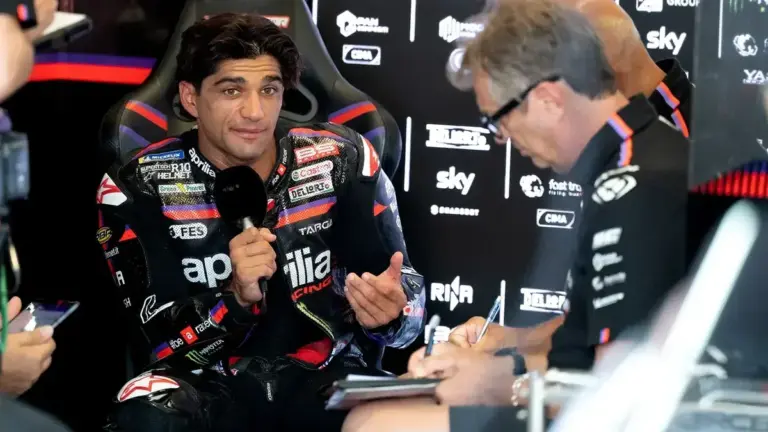
Rinus VeeKay’s 2026 finale was the perfect illustration. The Dutchman charged from 19th to as high as seventh, set the fastest lap of the race, and still crossed the line 16th. “We missed the balance a little bit in qualifying and, in the end, it was a track position race and we just couldn’t get too much done there,” he said — a result that nevertheless sealed a career-best 10th in the championship for him and Juncos Hollinger Racing.
The statistics from the Grand Prix of Monterey back him up. The 95-lap race produced 160 passes, 146 of them for position, but only six lead changes among four drivers, and just one caution period lasting three laps. Scott McLaughlin converted pole into a win that ended a 35-race drought, leading 87 of the 95 laps and finishing 1.3739s clear of Kyle Kirkwood. Alex Palou, already confirmed as champion, gambled on an early four-stop strategy from lap 19, wore out a set of used soft tyres and spent the closing laps being passed — proof that even the best car in the field cannot force the issue here.
Laguna Seca’s place on the IndyCar calendar
CART first raced at Laguna Seca in 1983 and stayed until 2004; the circuit also hosted MotoGP between 2005 and 2013, and took its WeatherTech title sponsorship in 2018. IndyCar returned in 2019 after a 15-year absence and the venue has since settled into its role as the traditional season closer, the place where championships are confirmed and contracts quietly expire.
That gives the finale a particular texture. Title fights are usually settled by the time the paddock reaches Monterey, so the racing is about pride, prize money and the following season’s paperwork — and about a two-mile lap that flatters nobody. The Laguna Seca Corkscrew does not care what position anyone is fighting for. It has been asking the same question since 1957: are you brave enough to arrive at a crest you cannot see over, and lift nothing?
How to watch IndyCar at Laguna Seca
UK viewers can follow IndyCar’s Monterey weekend on Sky Sports, with practice and qualifying typically running late on the Friday and Saturday evening and the race starting in the early UK evening on Sunday because of the eight-hour time difference to California. The circuit’s amphitheatre-style hillsides above the Corkscrew remain the best seats in American motorsport — and the only place to properly appreciate how steeply the road falls away.
Source: Motorsport.com.